

Recently, the federal government of Nigeria increased the cost per unit of prepaid electricity in the country, which has brought lots of complaints from electricity users in the country, especially those designated as ‘’Band A’’.
However, the cost per unit of prepaid electricity in Nigeria is not fixed; it varies depending on the ‘’Band’’ that you fall under. Currently, there are five bands of electricity users in Nigeria, which are Bands A, B, C, D, and E. Each of these bands has its own cost per unit, but the most expensive is Band A, while Band E is the least expensive.
So if you are using prepaid electricity in Nigeria, it is best for you to know the cost per unit of electricity that you consume to enable you to manage your energy judiciously. In the subsequent sections of this guide, we will discuss different electricity bands in the country and their corresponding cost per unit of prepaid electricity. Stay tuned as we go through it together.
Electricity Bands in Nigeria
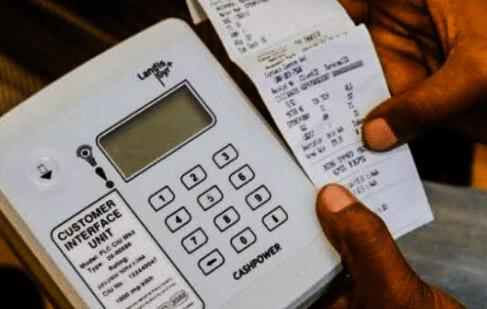
As we noted in the introduction, there are five different electricity bands in Nigeria. All prepaid electricity users in the country are categorized into these five groups. The groups are discussed below:
1. Band A Electricity Consumers
This is the first group of electricity users in Nigeria. The electricity consumers that fall under this category are those who normally have a minimum of 20 hours of power supply daily. People that fall under this category are those who reside in state capital, GRA, etc. If your area normally has up to 20 hours of light on a daily basis, you fall under this group.
Electricity consumers under this category pay the highest amount for each prepaid electricity unit they consume. They pay up to ₦226 for each unit of electricity they use. This is very high, and unfortunately, I fall under this category. In fact, to be honest with you, it has been a bit difficult for me to cope with paying my light bills since this recent hike, but we hope that the price hike will be reviewed soon. If you fall under this category like me, please try to adopt an energy-efficient behavior so that your credit unit will last longer, enabling you to cut electricity costs.
2. Band B Electricity Consumers
The second batch of electricity consumers in Nigeria is the Band B. These are electricity users who usually have a minimum of 16 hours of power supply per day. If you have up to 16 hours of daily power supply in your area, then you are under Band B. The cost per unit of prepaid electricity for those under this band is ₦80.57. This simply means that they pay ₦80.57 for each unit of electricity they consume. This is relatively cheap when compared to Band A.
3. Band C Electricity Consumers
If your region normally has a minimum of 12 hours of power supply daily, then you are under Band C. electricity consumers under Band C pay ₦68.55 for each unit of prepaid electricity they consume.
4. Band D
This is another category of electricity consumers in Nigeria. Prepaid electricity users who fall under this category are those who usually have a minimum of 8 hours of power supply daily. Electricity consumers in this group pay ₦59.77 per unit of electricity they consume.
5. Band E
The last group of electricity consumers in Nigeria are the Band E. These are electricity users who have the least power supply daily. Consumers that fall under this group are those that normally have a minimum of 4 hours of power supply per day. Users in this category pay the least amount for the unit of electricity they consume. They pay ₦48.50 for each prepaid electricity unit they use.
How Much is Prepaid Electricity Meter Cost Per Unit in Nigeria?
The cost per unit of prepaid electricity in Nigeria is not fixed; it is determined by the band you fall under. However, electricity consumers under Band A pay a higher amount for each unit of prepaid electricity they consume than other bands. The breakdown is below:
- Band A pays ₦226 per unit of electricity they consume
- Band B pays ₦80.57 for each unit of electricity they use
- Band C pays ₦68.55 per unit of prepaid electricity they use
- Band D pays ₦59.77 for each unit of prepaid electricity they consume
- Band E pays ₦48.50 per unit of electricity.
How Much is the New Electricity Tariff in Nigeria?
The new electricity tariff in Nigeria is ₦226 per unit of prepaid electricity. This new tariff is only applicable to electricity consumers under Band A who usually have a minimum of 20 hours of power supply daily. Other bands from Band B to E are not affected by this new tariff plan. This new tariff is high because it is almost a 300% increment from the previous tariff.
How Much is 1 Unit of Electricity in Nigeria 2024?
The cost per unit of electricity in Nigeria varies based on the band that the electricity consumer falls under. Consumers under Band A pay the highest amount, while those in Band E pay the least amount. It is detailed below:
- Band A (minimum of 20 hours of power supply daily) pays ₦226 for 1 unit of electricity.
- Band B (minimum of 16 hours of power supply daily) pays ₦80.57 per 1 unit of electricity.
- Band C (minimum of 12 hours of power supply daily) pays ₦68.55 for 1 unit of electricity.
- Band D (Minimum of 8 hours of power supply daily) pays ₦59.77 per 1 unit of electricity
- Band E (minimum of 4 hours of power supply daily) pays ₦48.50 for 1 unit of electricity.
How Much is 100 Units of Electricity in Nigeria 2024?
The cost of 100 units of electricity in Nigeria is variable because they are band-dependent. This means that the cost is determined by the band you fall under.
- For Band A, it is ₦226 * 100 = ₦22,600
- For Band B, it is ₦80.57 * 100 = ₦8,057
- For Band C, it is ₦68.55 * 100 = ₦6,855
- For Band D, it is ₦59.77 * 100 = ₦5,977
- For Band E, it is ₦48.50 * 100 = ₦4,850
How Many Units of Electricity for 5,000 Naira in 2024
The number of prepaid electricity credit units that you can buy with 5,000 naira is Nigeria is not fixed; it is dependent on Band that you fall under. Ordinarily, if you are under Band A, you are going to get smaller units than electricity consumers under other bands. The breakdown is below in line with each band.
- For Band A, the unit will be 22.12 units
- For Band B, it will be 62.06 units
- For Band C, you will get 72.94 units
- For Band D, the number of units will be 83.65 units
- For Band E, you will get 103.10 units.
FAQs
How Many Units is 1000 Naira on a Prepaid Meter in Nigeria?
The number of prepaid electricity units that 1000 naira can get for you in Nigeria varies depending on your band. The number of units is usually low for Band A but a bit higher for other bands, especially E. It is detailed below:
- 1000 naira will buy 4.42 units of prepaid electricity for Band A
- 1000 naira will buy 12.41 units of electricity for Band B
- 1000 naira will buy 14.58 units of electricity for Band C
- 1000 naira can buy 16.73 units of electricity for Band D
- 1000 naira can also buy 20.62 units of prepaid electricity for Band E
How Many Units is a 2000 Naira Prepaid Meter?
The number of electricity units that 2000 naira can buy for a prepaid meter is not fixed; it is dependent on the band to which you belong.
- For Band A, 2000 naira can buy 8.84 units of prepaid electricity units
- For Band B, it can buy 24.82 units of electricity
- For Band C, 2000 naira can buy 29.16 units of prepaid electricity
- For Band D, you can get 33.46 units of electricity with 2000 naira.
- For Band E, 2000 naira can get 41.24 units of prepaid electricity units.
How Many Units of Electricity for 50,000 Naira?
The number of prepaid electricity units that you can buy with 50,000 naira is detailed below:
- For Band A, you can get 221.24 units of electricity with 50,000 naira
- For Band B, 50,000 naira can get you 620.58 units of electricity
- For Band C, you can get 729.39 units of electricity with 50,000 naira
- For Band D, 50,000 can buy 836.54 units of prepaid electricity
- For Band E, you can get up to 1030.93 units of electricity with 50,000
How Much Electricity is 1000 Units?
The amount of money that you can spend to buy 1000 units of prepaid electricity in Nigeria is not fixed since it is totally dependent on the band that you fall under. The breakdown is:
- For Band A, it is ₦226 * 1000 = ₦226,000
- For Band B, it is ₦80.57 * 1000 = ₦80,570
- For Band C, it is ₦68.55 * 1000 = ₦68,550
- For Band D, it is ₦59.77 * 1000 = ₦59,770
- For Band E, it is ₦48.50 * 1000 = ₦48,500
How Many Units of Electricity for 3000?
The total number of prepaid electricity units that you can buy with 3000 is variable and it is determined by the band that you fall under.
- If you are under Band A, you can get 13.28 units of electricity with 3000
- If you’re under Band B, you will get 37.23 units of electricity with 3000
- If you are under Band C, 3000 can get you 43.76 units of prepaid electricity
- For Band D, you can get 50.19 units of electricity with 3000
- If you’re under Band E, 3000 can get you 61.86 units of prepaid electricity
How Many Units is 10,000 Naira on a Prepaid Meter in 2024?
10,000 naira can get different numbers of prepaid electricity units for users depending on their band. It is simplified below:
- For Band A, you can get 44.25 units of electricity with 10,000 naira
- For Band B, 10,000 naira can get you 124.12 units of prepaid electricity units
- For Band C, you will get 145.88 units of electricity with 10,000 naira
- For Band D, 10,000 can buy you 167.31 units of prepaid electricity
- For Band E, you can get 206.19 units of electricity units with 10,000 naira.
Conclusion
We have discussed extensively the cost per unit of electricity in Nigeria and how different electricity bands affect your electricity tariff. Whether you’re in Band A, B, C, D, or E, each has a unique rate structure, and they impact your overall electricity costs. Once you know your specific electricity band, it will help you to make an informed decision about your energy use, enable you to budget effectively, and it will also guide you on the best ways to manage your energy consumption.